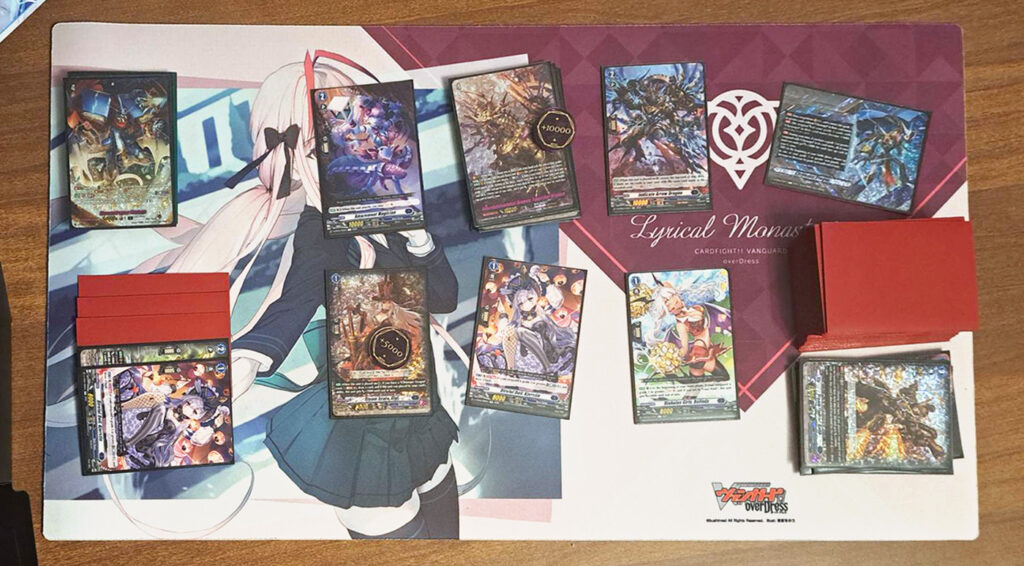
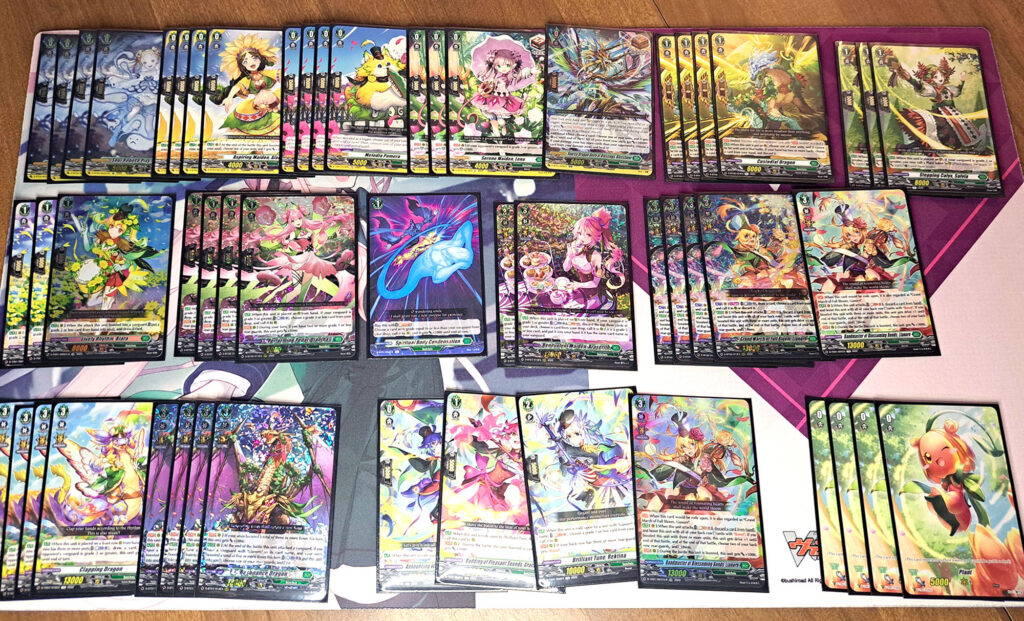
It’s Serena, back with another Cardfight Vanguard deck tech! This time, I’d like to focus on the deck that’s taking control of the meta in Japan that recently released here as well. I’m talking about the Chronojet Stride Deck Set! This product reintroduces the Stride mechanic from the G anime into Overdress’s D format. The Deck Set itself contains all the basics you need for the strategy, but there are some powerful upgrades to made. We’re going to focus on more of a budget approach in this article.
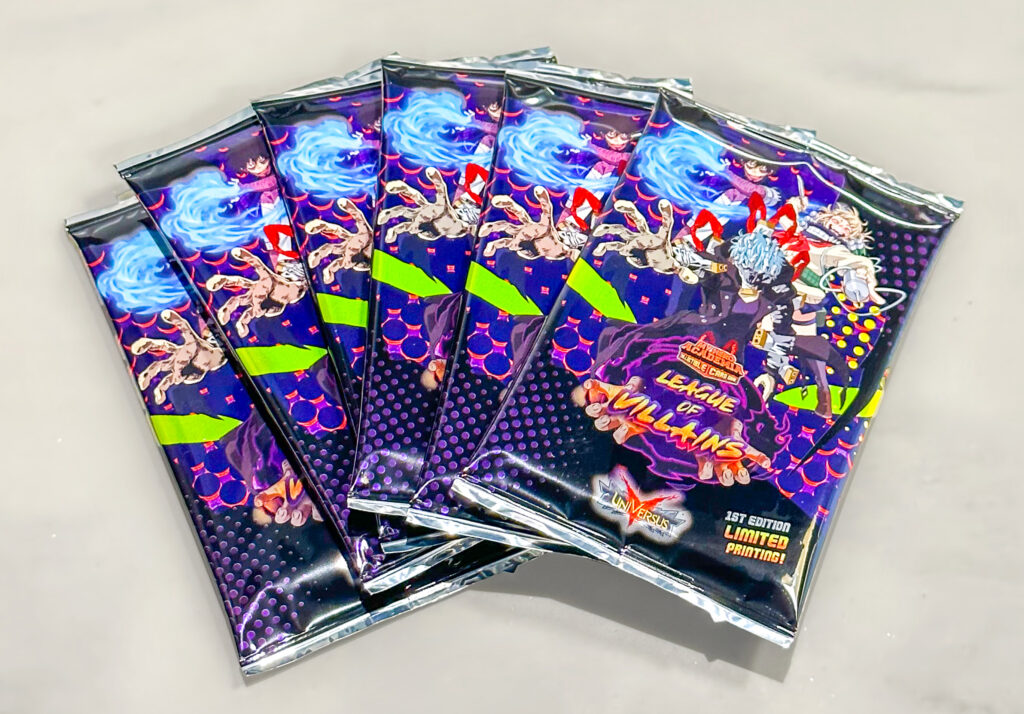
Prerelease tournaments for the newest MHA block release for Universus begin on on Feb 23rd and run through the release of the set on March 3rd. A list of stores participating can be found on the official site. These tournaments use the sealed format, which has different considerations than standard play.
To begin, each player receives 6 booster packs, which forms the available card pool to build your deck. Additionally, each player should get a promo card, which is also usable in the event. Where sealed differs from standard begins with deckbuilding. First, you ignore resource symbols on your cards; anything you pull can be used. Second, you ignore the 4 card limit. If you pull 6 copies of the same card, you can use all 6. This can open up a lot of interactions and decks that could never work in standard. Without further ado, here are my unsolicited and non-professional insights.
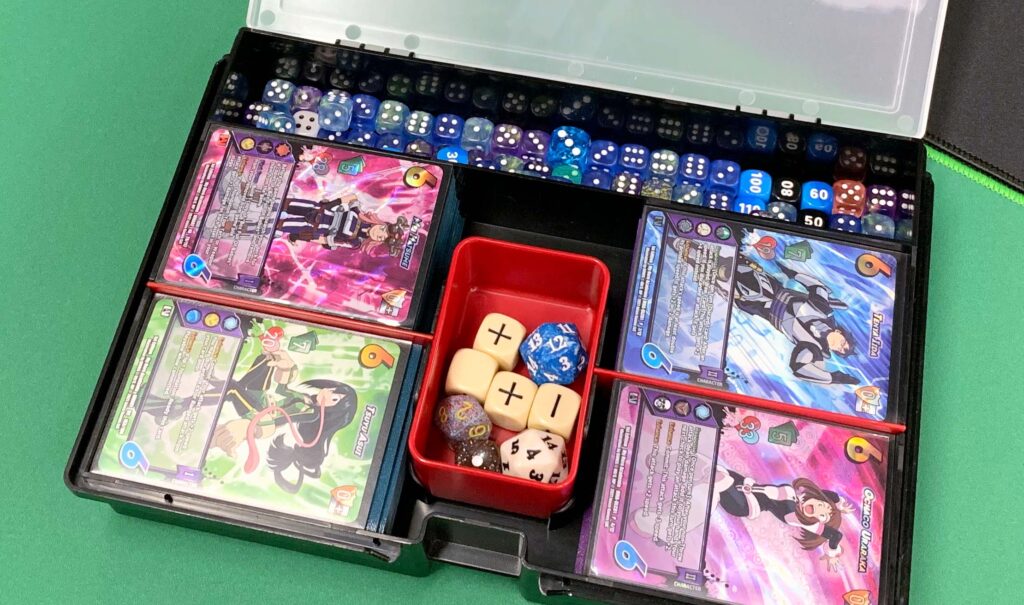
Mt. Lady is an interesting character that, unlike most other characters, wants additional copies of the character card in the stage. The first enhance fetches a copy from the discard pile and places it in the stage. If you can’t, then you add a card from discard to your momentum. You can then use the momentum to give your attack +2 damage per copy of Mt Lady in your stage. Being able to give all of your attacks +8 damage is powerful, but blocks can be an issue. To help get around this, I build the deck on Void, focused on kick attacks to add some speed. The full deck list can be found on UVS Ultra.
Standup, Vangaurd! Hey, guys! It’s Serena, back with another Cardfight Vanguard Overdress deck tech! This time we’re talking about one of the decks from the anime itself, the band-leader, Lianorn! Lianorn is one of the decks tied to Stoicheia and has a great jumping off point with the trial deck. It revolves around all of your back-row rearguards boosting Lianorn for massive swings!
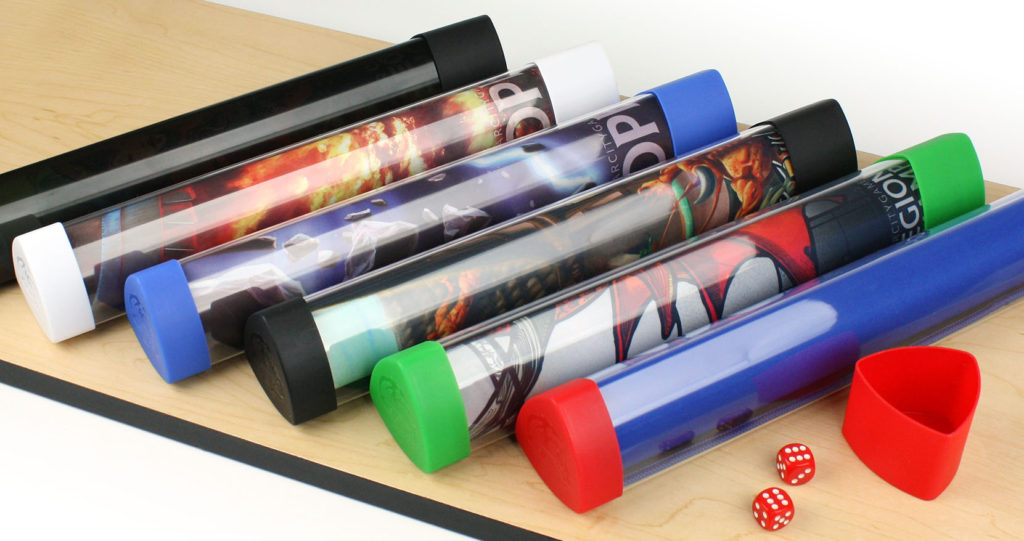
There are a few things every card gamer needs, regardless of their game of choice. Cards obviously, but also sleeves, a box or case, and perhaps some dice and tokens. Many players also use playmats to help protect their cards. Playmats are a common prize for tournaments and events, many being exclusive. In any case, the best way to store or display your playmats depends on your needs.
Hi, I’m Serena, and I’ve been passionate about card games since I was 8 and have kept up with them for over 20 years. I’ve played quite a few, including MTG, Yu-Gi-Oh, and most notably, Cardfight Vanguard. I have a particular interest in the Overdress/Standard format.
Stand up, Vanguard! Feltyrosa is all about Calling her Ghostly friends to aid her on stage, then swarming your opponent with up to 5 attacks and 4 drive checks! With Rondo of Eventide Moon, when Feltyrosa’s drive check reveals a Ghost normal unit, you get to Call it to an open front row rear-guard circle. If you do, you can Counterblast 1 to get another drive, and can do this as many times as you can Call off her Skill. You can find a full deck list on Bushiroad’s Deck Log. You can find more information on the game at the official website.
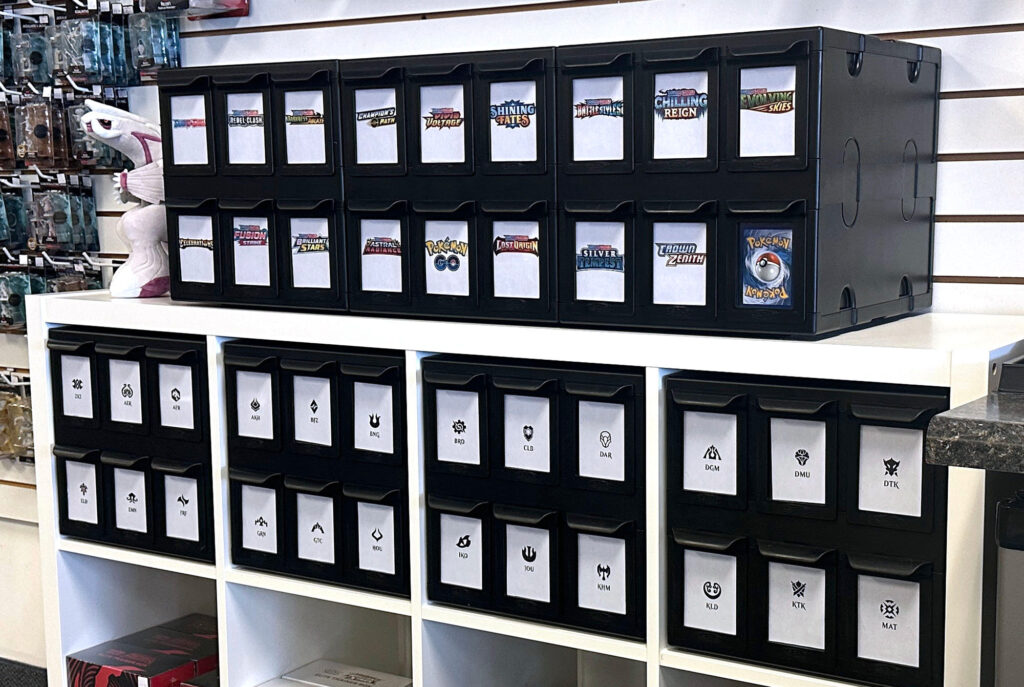
If you have a large collection of sports or gaming cards, you likely have card boxes on your shelves. The IKEA-style shelves (pictured below) or wire rack shelves (pictured further below) are effective solutions for card box storage.
So, what card boxes are best for your card collection? There are a few things to consider before you buy card boxes or shelves. Will your cards be stored loose, in toploaders, in magnetics, or other card holders? Will you have any graded cards? How many cards are in your collection? Whatever the answer, BCW has card boxes to solve your storage needs.
Before you purchase card boxes, consider how they will fit on your shelves. We provided examples below to demonstrate how your boxes will look on IKEA or wire rack shelves. The wire shelves we used are 36 inches wide by 16 inches deep.
BCW also offers small card boxes, which are not pictured below. You can find all of our card boxes here.
Card Catalog on IKEA Shelves
The Six-drawer Card Catalog is designed to fit in IEKA or similar shelving but can also lock together with other units to create a modular system. Using the catalog with an IKEA Kallax lets you find cards easily, as you don’t have to physically maneuver boxes. This makes it a perfect setup for someone with a large collection they access regularly.
On October 15th, North America saw the release of the My Hero Academia card game, based on the hit anime and manga series. The game uses the UniVersus system to replicate fast head-to-head fighting action. The system has its roots in the Universal Fighting System series released in 2006. The name was changed as the game stopped focusing exclusively on fighting games like Street Fighter and Soul Calibur and used properties ranging from the Mega Man to Cowboy Bebop.
Players select a character to build their deck around. Players build foundations and assets, use action cards, and unleash attacks to try to reduce the opponent to 0 life. Each card has a difficulty printed on it and success is determined by putting the top card of the player’s deck into the discard pile, hoping for a check number that is equal or higher than the difficulty. A successfully played card remains in the staging area, increasing all other card difficulties by 1. For more information, check the resources page.
The Final Fantasy series has a storied history in the realm of video games. Spanning multiple consoles, genres, stories, and characters, it remains a popular franchise. While there is a Japan-only Final Fantasy card game, this focuses on the more recent, international version released in 2016.
The Final Fantasy TCG uses 50 card decks made of cards representing various characters from the series, with the goal of dealing 7 points worth of damage to the opponent. The game uses 4 types of cards: Forward, Backup, Summon, and Monster. Each type has a different function, but backup and forward cards are most important. For more information, check the official site, and an interactive tutorial can be found on the rules page.
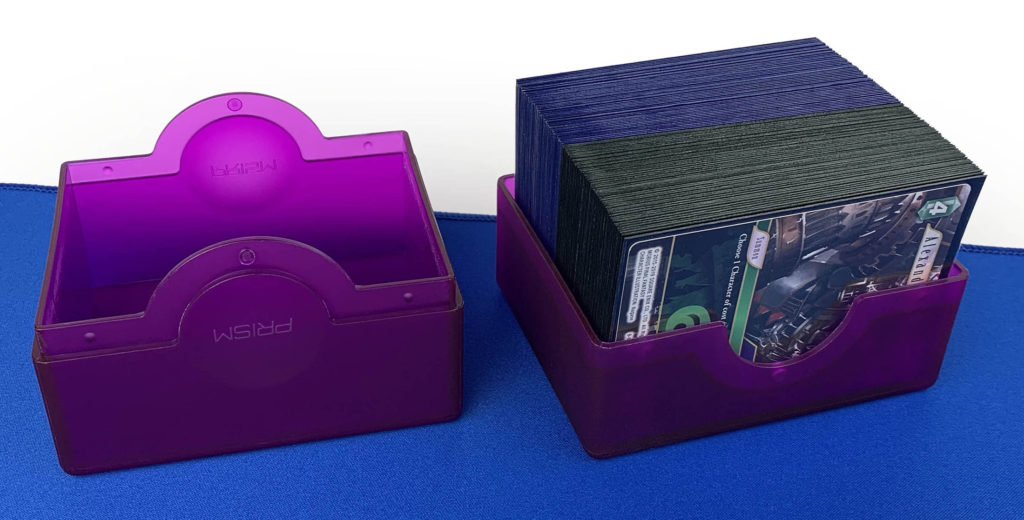
A FFTCG deck must contain 50 cards, making decks easier to store and transport. For example, the Prism Deck Case holds two single-sleeved, 50 card decks.
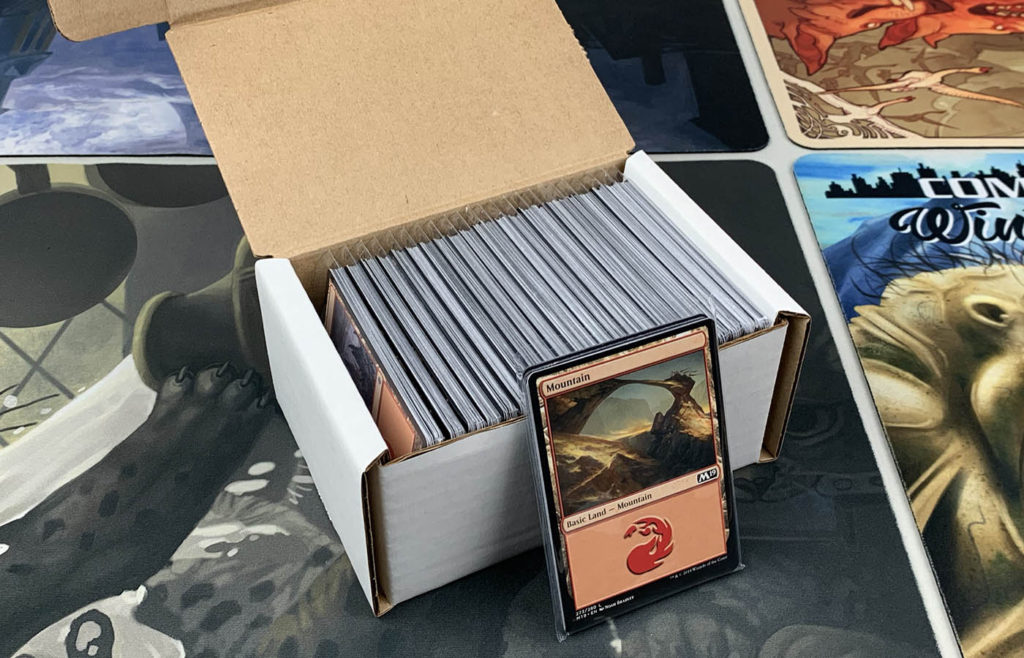
Magic the Gathering has many different formats, both official and fan made. One of the most popular ways to play is a Cube Draft. It combines elements from constructed and limited play to create a unique, curated experience.
A cube consists of a selected group of cards; at least 360, although larger cubes for more players or more variety are possible. The cards are divided into 15 card “packs”, which are then used as booster packs for drafting. The cards used in the cube are up to the creator, although there are resources like Cube Cobra and CubeTutor that can be useful.
The first consideration is how to make the “packs”. While there are specially designed products for this, another, more economical option may be more appropriate, especially if you’re just starting your cube. Some options to consider are BCW Thick Card Sleeves, BCW 10 Count Slider Boxes, BCW 7mm Toploaders, or 15 ct Card Cubes. The card cubes allow the use of single sleeved cards, while the other options work best with raw cards.