
It’s Easy to Enclose your Comic in the BCW Comic Book Frame!
1
Record covers for 33 RPMs provide a tangible, artistic element to the album that digital music cannot emulate. Gatefold albums, which unfold into two panels, provide an even larger canvas for the band to present its style. Gatefolds were popular starting in the late 1950s and common until the CD revolution in the 1980s.
Gatefold covers were used for double LPs as each cover can hold a record. Therefore concert albums regularly used a gatefold design to allow for the needed double LPs of long recordings. Yet gatefolds were often single albums and the extra cover panel was simply used to print lyrics, band photos and artwork.
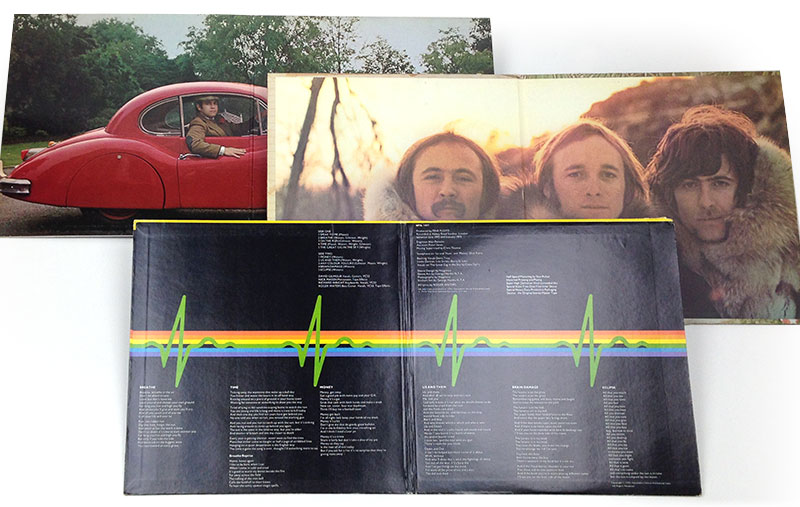
Elton John A Single Man, Crosby, Stills & Nash, and Pink Floyd The Dark Side of the Moon
Some notable gatefold albums include The Beatles Sgt. Pepper’s, Bob Dylan Blonde On Blonde, Led Zeppelin IV, Pink Floyd The Dark Side of the Moon, Miles Davis Bitches Brew, U2 The Joshua Tree, and Rush 2112.
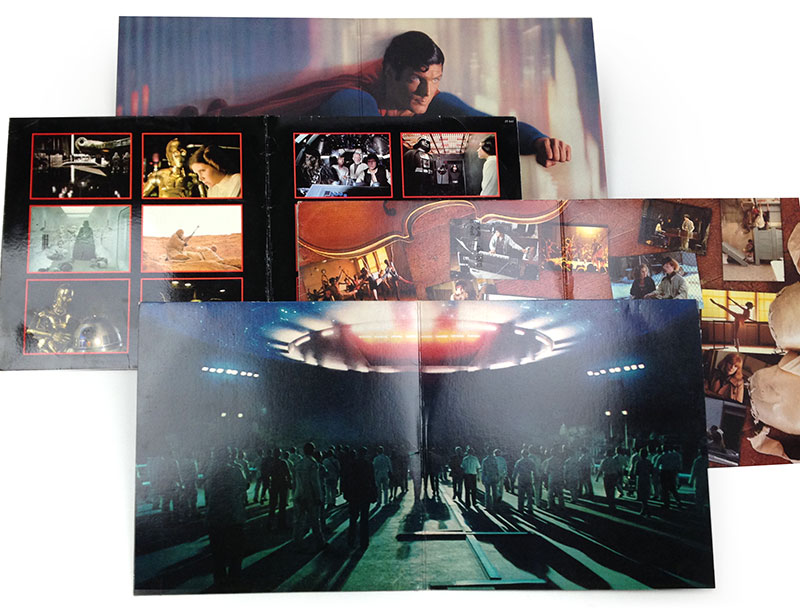
Soundtrack Gatefold Double LPs: Superman The Movie, Star Wars, Fame, and Close Encounters of the Third Kind
Gatefold albums for plays and movie soundtracks were common to accommodate the needed double LPs. These provided lots of space for movie stills and helped create the mood of the movie while listening.
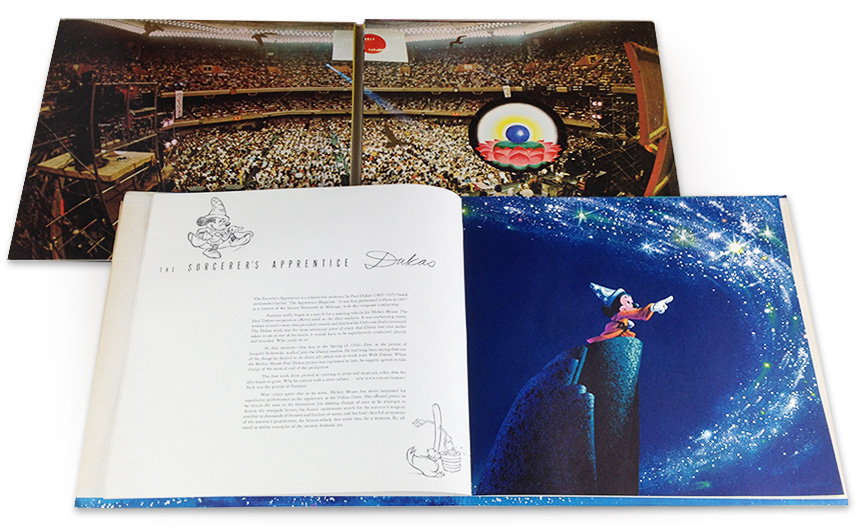
Santana Lotus recorded live in Osaka in 1973 and Walt Disney’s Fantasia from 1957 (1940 movie)
Other albums went beyond simply opening up into two panels. The above Fantasia album had a book format with a page spread for each song of the classic soundtrack. The above Santana Lotus concert recording expanded from a gatefold to reveal multiple artistic panels.
BCW Supplies offers numerous solutions to protect, store and display records. As some collectors prefer to present gatefold albums in an open position, we have added Album Sleeves for Open Gatefolds and Toploading Holders for Open Gatefolds. If collectors prefer to store gatefolds in the traditional closed format, BCW has 7mm Wide Toploading Record Holders that accommodate this size. See all of BCW’s music supplies for 33s, 45s and CDs.
What gatefold albums are iconic to you? Share your favorites in the comments below.
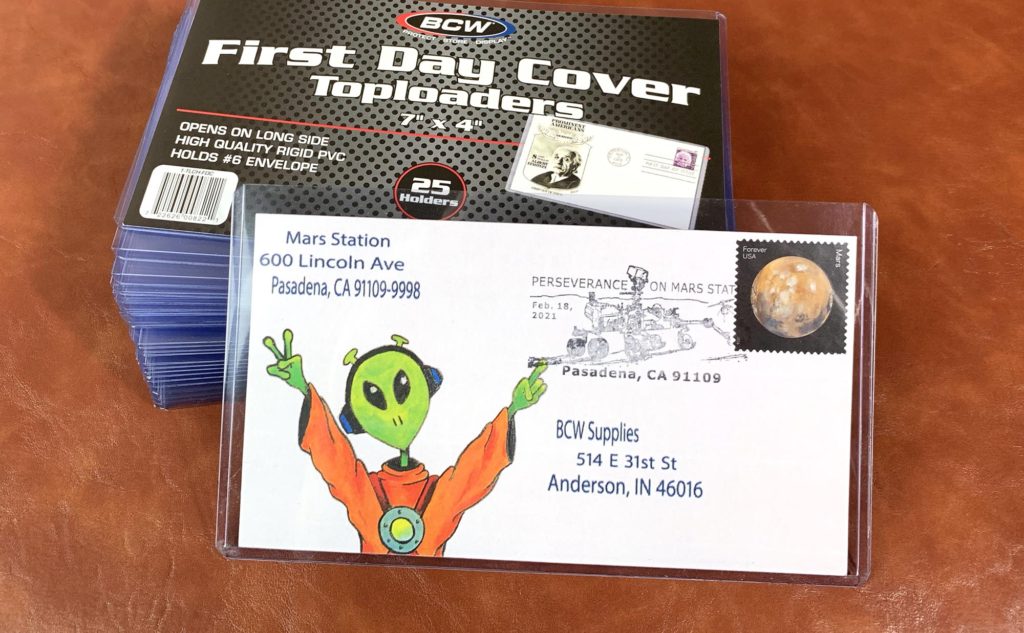
A First Day Cover (FDC) is an envelope or postcard with a stamp that has been cancelled by the post office on the first day the stamp was issued. This traditionally involves getting a “First Day of Issue” postmark on the stamp on the respective date, however those rules have relaxed in the U.S., and now FDC collectors can send stamped envelopes to a Special Event Coordinator to get special “First Day of Issue” postmarks. Often first day of issue stamps are placed on special First Day Cover #6 envelopes or postcards, known as cachets, that commemorate the topic of the stamp.
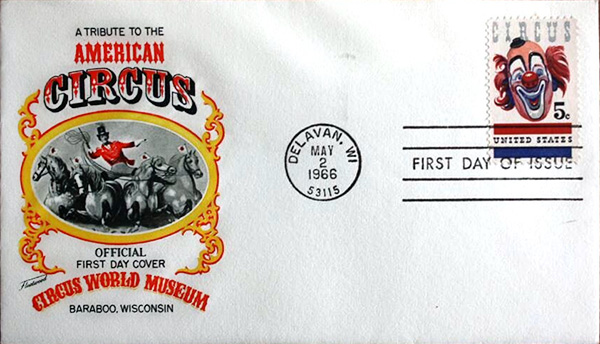
American Circus First Day Cover
Source: Larry Kellogg, www.worthpoint.com
Collecting First Day Covers is fun for stamp collectors as it requires some participation…
First, you must be aware of the release schedule for new stamps if you plan to collect new First Day Covers. This USPS site is a good reference for U.S. stamps. Previously released First Day Covers can be found at stamp stores, antique stores and online.
Second, there are numerous topics for stamps and First Day Cover cachets. If you have a favorite theme, such as bird stamps, collecting FDCs of that theme can be fun and rewarding.
Third, getting an envelope franked with a “First Day of Issue” postmark in only done at the post office (or a special postal station) in one location traditionally. Often there’s a First Day Ceremony for a new stamp design. So if a stamp depicts a historical event, the location related to the historical event may host a First Day Ceremony. As an example, The Batman themed First Day Cover below was available at US Post Offices on October 9th, 2014 to commemorate the 75th anniversary of the Caped Crusader. This stamp release was coordinated with the New York Comic Con, where the Post Office established a temporary postal station, Gotham City Station. Parcels cancelled at Gotham City Station received a special pictorial postmark, adding another interesting aspect for stamp collectors. As a service to stamp collectors not attending the New York Comic Con, the USPS allowed customers to mail envelopes or postcards with the adhered Batman stamp to a Special Event Coordinator in New York City and then the stamps receive the special First Day of Issue postmark and get mailed to the respective address.

Batman First Day Cover with pictorial postmark
BCW Supplies offer several items to protect, store and display First Day Cover envelopes and postcards. Select from sleeves, toploaders, and pages for 3-ring binders. See all of BCW’s Postcard and Envelope Supplies.
It always seems to start the same. We buy a new kit and build it. It gets played with for a few weeks and then eventually it ends up disassembled and incorporated into the mass that is the big box of LEGOs. This isn’t really a problem if you keep the instruction manuals because you can alway go back and rebuild the kit anew. The problem becomes “How do I keep the little books safe, intact, and together?”
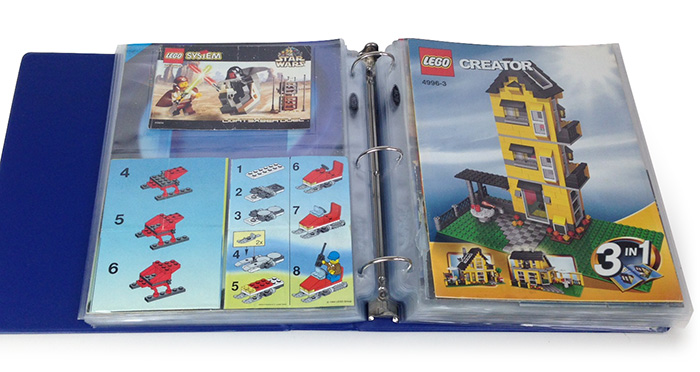
A collection of LEGO books stored for future use.
I find that 3-ring binder pages work really well for this task. The 1-pocket document page works great for the large kits. The 1-pocket photo pages are good for the medium large kits and the 2,3, and 4 pocket pages do a good job of holding the booklets for the smaller kits. Sometimes I had to stack two booklets to fill a pocket because of the odd shape of some of these instructions.
When assembled, the LEGO binder is a fun item for my kids to flip through while we remember the fun we had assembling these kits.
by Martin Dale
See all of the albums and pages offered by BCW Supplies.
BCW offers numerous sizes of boxes to store collectible trading cards. The boxes are named by numbers, implying they can store that many cards. An example is the BCW 930 Count Box – its title implies it holds 930 cards, however the description claims it holds 825 cards. So why do BCW box names not match what the boxes actually hold? Is there a system to help collectors understand the box naming system vs. the actual box quantity amount?
This is a frequently asked question at BCW Supplies. To understand the answer, a brief history lesson in baseball card collecting is needed. Between 1956 and 1981, Topps was the only manufacturer of baseball cards and they used an 18 point card stock. In 1981, the MLB added 2 more licensees which were Donruss and Fleer. By 1989, The Upper Deck Company, Score, and other brands started emerging. With competition came innovation and card companies started making cards with a little heavier card stock and UV coating which made them a couple of points thicker. One manufacturer of football cards, Action Packed, even started embossing their cards. Then, the card manufacturers started making thicker “premium brands” of trading cards and adding pieces of memorabilia to some of the special cards, usually referred to as inserts.
So, the answer is that, for the period between 1956 and 1989, cards were approximately 18 points thick (18/1000th of an inch) and the boxes were originally designed for these cards. As your cards might be thinner or thicker than 18 points, the card box will hold more or less depending on your situation.
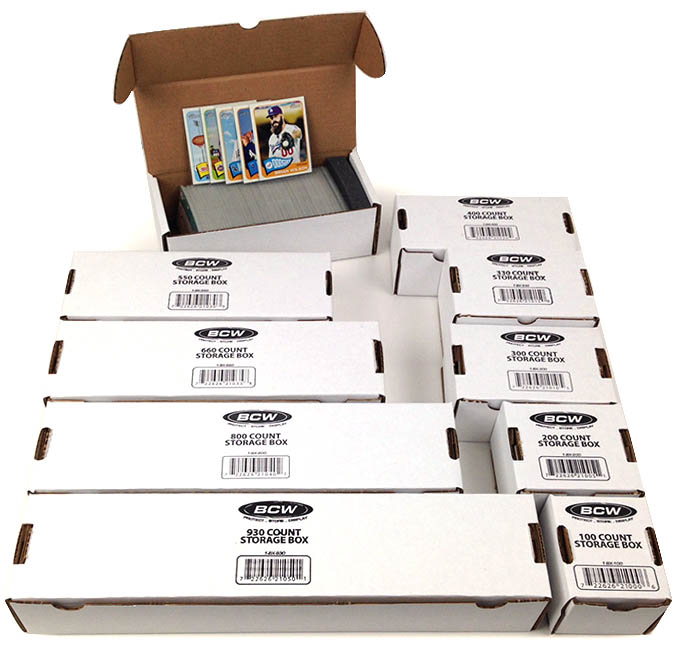
The bottom of most BCW boxes describes their size.
The 1000 Count TCG Card Storage Box is sized to hold 1000 game cards, such as Magic: The Gathering (MTG), Pokémon, and KeyForge. These gaming cards on a pressed, glossy paper that’s thinner than traditional sports cards. A MTG card is about 11 points thick (11/1000th of an inch), while a 1980’s Topps baseball card is about 18 points thick (18/1000th of an inch). BCW card boxes have been named for the cards they were designed to hold. So the 1000 Ct. TCG Box is designed to hold 1000 gaming cards, while the 800 Ct. Box will hold about 800 traditional sports cards. This explains why (in the picture below) the 1000 Ct. Box, designed for the thinner game cards, is actually smaller than the 800 and 930 Ct. Boxes, that were designed for the thicker sports cards.
See all of the BCW Trading Card Boxes. Please refer to the product description to ensure the box you need will protect all of the cards you’re storing.
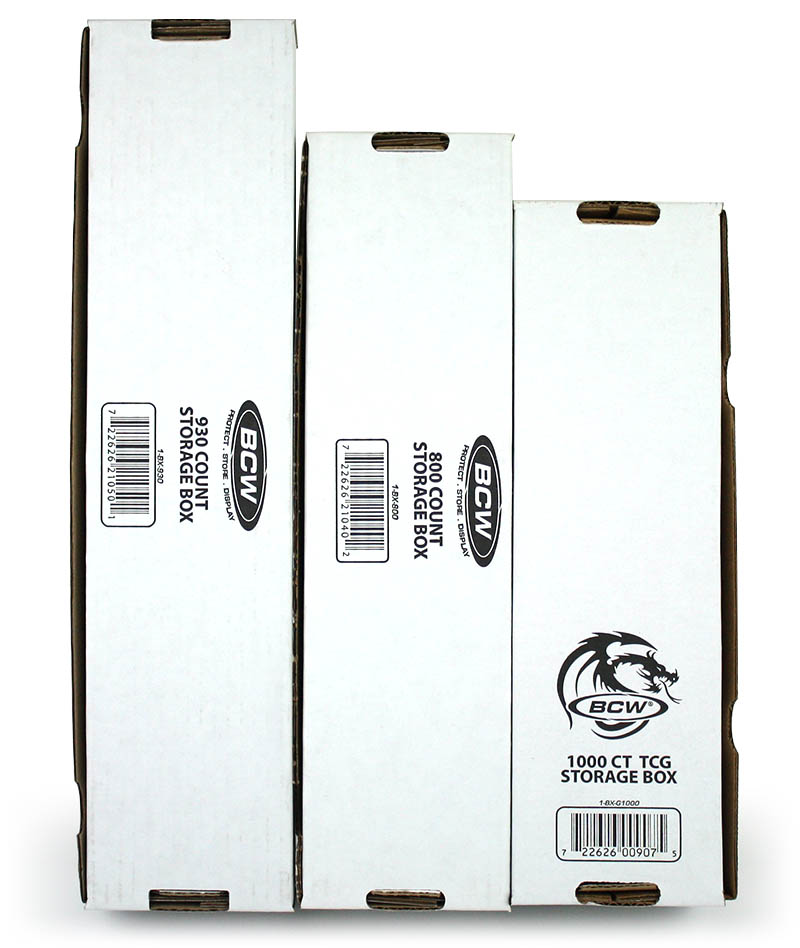
The bottom of the 930 ct., 800 ct., and 1000 ct. TCG Card Boxes
How did I get involved in such an unusual hobby?
A memoir by Robert Lancaster
1968 – AN INNOCENT ENOUGH BEGINNING
One day in 1968 or 1969 (Making me ten or eleven years old at the time), my mother took me on a drive to shop at the Hallmark Greeting Card store at the Eastland Shopping Center in Covina, California (about five or ten miles from where we lived.
Shopping trips had never been a frequent occurrence as I grew up, mainly because we couldn’t afford them. – so this was a real treat for me, and I jumped at the invitation.
This was not long after my Dad had died (of Yet Another Heart Attack), and my Mom was trying to cheer me up.
As we walked into the store, I excitedly asked her if I could look for something we could buy for me. She told me that would be fine, as long as it cost less than a dollar, and she had to approve of it first.
I immediately headed for the “games” section of the store, and looked for anything I’d like which cost less than a dollar. This was a rare occasion – I could not waste it on getting something less than “cool”!
A display of miniature decks of playing cards caught my eye. We played a lot of cards at home (mostly Rummy and Solitaire), so I figured that my Mother could not object to my getting a deck of playing cards. And the ones in the display intrigued me because they were kid-sized (about half the size of a regular deck). I always enjoyed kid-sized versions of things, and regular/adult-sized playing cards were tiring for kid-sized hands to hold for very long, so I went over to take a closer look at the selection.
Each of the boxes containing the decks showed what looked to be the design on the back of the deck inside. Many/most of them were pretty boring designs: landscapes, pictures of horses – that sort of thing.
But there were several which had images of Peanuts comics characters against brightly-colored, almost psychedelic backgrounds.
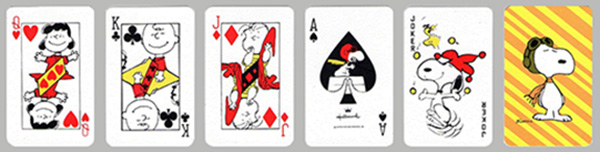
I loved Peanuts characters, Snoopy in particular, and owned several paperback collections of Schulz’ work. And, having teenage siblings, I knew how “groovy” (this was the 1960s, after all) psychedelic colors and designs were!
I looked through the Peanuts decks, and picked out one which had Snoopy, dressed as The WWI Flying Ace, against a yellow-and-orange, diagonally-striped background.
“Groovy” indeed – and it only cost seventy-five cents (if memory serves)!
I took it to my Mom to get her approval. At first, she was not happy with my choice, saying that we already owned decks of playing cards, so we didn’t need another one.
But I explained that they were Just My Size, and THEY HAD SNOOPY ON THEM, and she relented, after first checking the price. She tossed the box into her shopping basket (Yaaay!), and we finished our shopping.
When we got home, I took the little Hallmark’s bag containing my treasure to my bedroom, plopped down on the floor, and opened the box with the deck.
At first, I was disappointed because the Jacks, Queens and Kings – what we called the “face cards” in our family – did NOT look like those in a regular deck. The Jacks, Queens and Kings were Linus, Lucy and Charlie Brown!
This at first disappointed me, because it meant (to me) that the cards were not a kid-sized version of a regular/adult-sized deck, they were a toy!
But when I saw that Snoopy was on the Aces – and, better still, was on the jokers (juggling four balls AND Woodstock!), the deck’s “coolness” started winning me over. It soon became well-used, with me playing countless hands of Rummy with my siblings and friends using it. And playing Solitaire no longer took up an entire coffee table to play!
The little box with the deck earned a treasured place in the top drawer of my dresser, where it was stored for the rest of my childhood.
1978 – THE ADDICTION CONTINUES
I can tell you the EXACT DATE when I purchased the second deck in what would become my collection/obsession: December 16, 1978.
I know the date because it was the day AFTER the day I got married to Cindy – my first wife.
The most we could afford for a “honeymoon” of sorts was a day at Disneyland.
As we strolled up the sidewalk on the left side of Main Street (as you enter the park), there was a glass case, about the size of a phone booth (remember those?) sitting on the sidewalk in front of a store.
Inside the case was an Audioanimatronic figure of a Gypsy fortune teller, seated at a table, telling fortunes.
On the table before her was a crystal ball, and an array of playing cards, laid out in fortune-telling fashion. The gypsy waved her hands above the cards, while her lips moved. Her words, played through a speaker mounted on the outside of the case, invited passers-by to pay to have their fortune told.
Something about those playing cards caught my eye, and I stopped to take a closer look.
Sure enough, the Jacks, Queens and Kings on the cards were NOT those of a standard deck, but were portrayed by Donald Duck, Minnie Mouse and Mickey Mouse! The joker, of course, was portrayed by Goofy.

I was immediately reminded of my beloved Peanuts deck, and wondered if the deck was for sale somewhere in the park. I looked in the display window of the store we (and the case) were in front of, and saw that copies of the deck – some with a blue back, some with a red back – were for sale!
We entered the store and I bought one of the decks.
When we got home that evening, I rummaged through stuff from my childhood until I found my old Peanuts deck. I then opened my new Disney deck, and then found a plain-old, standard deck in the house, and spread the three decks out on my desk, comparing their face cards (which, I would much later learn, are more properly referred to as the court cards, or just the courts.
I found that I really appreciated what the artist/designers had done with the Peanuts and Disney decks – they had put a new spin on an old tradition, while still leaving everything recognizable enough for play.
I began to wonder if there were perhaps more decks out there like these. If there were, what a fun and different collection they would make!
I mentioned this to Cindy, and she said that she sometimes saw old decks of cards for sale in the antique stores and antique malls she frequented. She didn’t know if they would be what I was interested in, but thought it might be worth a look – I agreed, and we soon started haunting such places around SoCal together.
All retail stores strive to find the perfect location for their business to grow. This is especially true for gaming and comic shops where the customers come to hangout in a fun environment. Todd Nightenhelser, owner of TCB Games in Huntington, Indiana is taking the challenge to make the ideal gaming and comic destination by moving his shop into a historic building – The Huntington Free Library.

The Huntington Indiana Carnegie Library
Located at Warren St. and Park Dr. in downtown Huntington, the library stands where the first permanent hotel in Huntington was built by General John Tipton in 1835, however the original building was destroyed in 1873. In 1901, the School Board of Huntington received an offer from 19th-century industrialist Andrew Carnegie to construct a public library. Between 1886 and 1919, Carnegie’s donations helped create 1,679 libraries, bringing books within reach of millions of Americans. With matching donations from the local community, the Huntington Free Library was built in a neoclassical style and is larger than most Indiana Carnegie libraries.
Huntington originally grew in the 1800′s as a transportation hub as it’s located along the Wabash River. The Wabash and Erie Canal and railroads added to the city’s impact. When transportation methods shifted to trucking, this created a strain on Huntington. TCB Games and other Huntington business are providing creative ideas to help reinvent the beautiful downtown.
To transform the old library into a retail and community space, Todd faces several challenges. First, the building needs to be rezoned for commercial use. Second, the library needs to meet modern American Disabilities Act standards to make the site handicap accessible. This includes adding automatic doors, wheelchair ramps, handicap bathrooms and an elevator. At the same time, Todd is trying to maintain the historical significance of the building and manage the construction costs. Much of the 1903 library is in original condition, including beautiful wood molding, doors and staircases.
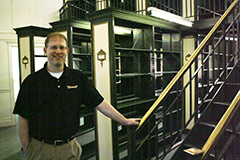
Todd Nightenhelser, Owner of TCB Games
The main room features original bookshelves with a second level made with a floor of poured glass panels. Preserving the features of the library as it converts into a retail space is key to Todd’s plans.
For TCB Games to strive is a relatively small town, it has plans to partner with the community to make the new shop flourish in the library. In addition to selling video games, board games, card games and comics, Todd has plans to share the library with other local groups. The Huntington Literacy Coalition will utilize a room to support their goals. Additionally, Todd has spoken with Huntington University and the Boy Scouts about organizing activities at the library.
The reopening of The Free Library as the new TCB Games is scheduled for the fall of 2014. Todd has lots of creative ideas to develop this space into a fun gaming and comic shop. BCW Supplies will post a follow-up article after the grand reopening, but you can stay connected with the progress on the TCB Games Facebook Page or stop by their current location at 515 N. Jefferson St., Huntington, Indiana.
As the Digital Age gains an ever increasing momentum, a segment of audiophiles have chosen to embrace the Analog Era in numbers that find old and young alike, enjoying what was once to be cast aside and left as a footnote for music history.
Digital, at that time, was the superior way to go, offering clean, precise sound that fans had hoped for with the premium virgin vinyl issues and half-speed masters released by Mobile Fidelity Sound Labs. The delicate nature of the vinyl medium had its limitations with static, scratches and impure raw vinyl, used to further degrade the sound. To satisfy the demand for clarity and storage concerns, the compact disc filled that need rather well. Compact discs were the cure for the ailments of the Vinyl Era, but they came with a stiffness and sterility of sound. Analog, by comparison, had a warmth and genuine feel that helped to make the music a true experience. And as time continues, collectors still seem to enjoy that charm of the procedure…disc to platter, needle to groove.
A recent visit to a high profile pop culture retailer in the Indianapolis shopping district, found an interesting blend of new vinyl issues of past best-selling titles carried alongside the retro players that help transfer those vinyl issues to CD duplication for convenience. The 60’s and 70’s have come full circle and showcase the fact that there are a fantastic amount of well written songs and melodies from those decades, just waiting to be heard again by a new generation.
Baby boomers have plenty of favorites to choose from during that era and are still wanting to embrace the memories of their youth. New audiophiles are just discovering the authenticity of vinyl recordings, not to mention the spectacular array of album covers and additional art inside the gatefold sleeves.
As the re-introduction to albums continues to grow, the need for storage and preservation has timely merits. BCW has added product lines to aid every discerning collector. They offer jackets, sleeves, toploads and storage boxes for media, 45’s and LP’s, with their cause for business, to… “Protect, Store and Display”.
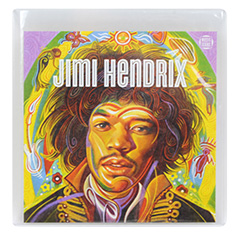
Music Icons US Postal Stamps featuring Jimi Hendrix
Even the US Postal Service recognizes the efforts of past musicians in 2013’s Music Icons series of commemorative stamp issues. The likenesses of Johnny Cash, Ray Charles, Lydia Mendoza and most recently new series member Jimi Hendrix, are part of this series. The fifth issuance in this series will be Janis Joplin, scheduled for later this year.
It’s great to see a special day, Record Store Day, reserved for the hobby that has molded pop culture to what it is today and will continue to be as the future unfolds.
An overview by Stephen and Joy Butler
As the demand for high-end sports cards with autographs and jersey patches increased, the price of the cards increased. This opened an opportunity for creative sports card enthusiasts, with the know-how of modern internet tools, to create case breaking.
What’s case breaking? While the process varies among the case breakers, the general process is the same. First, an organizer buys a case of cards and offers collectors to buy a spot in a break. This spot may represent a team. For example, the participant may ask for, or through a lottery, get all of the Colts cards from a box of NFL cards. Then the breaker publicly awards the cards to the collectors in a live streaming video process. Lastly, the organizer ships the cards to the collector. In addition to being a fun forum to hang-out (virtually at least) with fellow collectors, case breaking gives the average collector the opportunity to get a valuable card and to chase after cards of the stars or teams that interest the collector most.
An interesting aspect of case breaking is the creative mix of modern media. The process may involve live video streaming, recorded videos, chat rooms, shared Google Documents, PayPal and various websites. All of this is molded together by the case breaker to create a social experience.
While I was at the 2014 Industry Summit for sports cards, I asked several respected case breakers and bloggers “who was the first case breaker?”. Kris from KAB, Chad from Firehand Breaks and Sergio from Sports Card Album suggested Chris from CardsInfinity is either the first case breaker, or he would know who started before him.
So here you have it… The response of “who was the first case breaker”, according to Chris at CardsInfinity:
From my understanding Dr. Wax Battle, at The Backstop in New Jersey, was the 1st to video tape some customers breaking boxes when they came in his store. He started doing that once in a while in the year 2006. The camera angles were not the best, but they were entertaining to watch. You got to see first hand what was coming out of the boxes. There were also around 2 or 3 other people that would video tape themselves opening their personal boxes and uploading them to YouTube. Once again these were entertaining, but the camera angles were not the best.
The Doctor Wax Battle Show in 2006
I bought a video camera in March of 2007 and I was going to start video taping my customers open boxes in my store. But the way I would be different, is that I would use the “Vicarious” view. That means I would breeze through the base, just focus on inserts and hits. Also, just show the hands when opening the packs and not the whole person. The videos would be very fast and you could live vicariously through the opening of boxes. Well this took off pretty quickly. I would say in less than a month I had around 20+ breaks on YouTube and all of them were getting 1000′s of views. People would email me all the time, and still do to this day, and tell me that my videos got them back into collecting cards and or that they would watch my videos to see which products to break.
So after about 4 or 5 months of video taping my customers open boxes, I came up with the idea of breaking boxes for customers online. I would create a website, CardsInfinity, and people could order boxes from me. They could either have the boxes shipped sealed or choose to have me open their box and upload the video to YouTube. I thought it would be really cool, if someone could order a box from me and have me open it on YouTube and upload it immediately. This way they don’t have to wait for their box to be shipped and they would get the instant gratification of knowing what they got. Other side benefits were… they would be able to trade/sell cards easier with the viewing audience on YouTube. They would get their cards sleeved, toploaded and teambagged. Plus they could follow the case to see what comes out. If I opened 2 of the 3 Exquisite boxes from a sealed case and nothing major came out, then you would be able to see that. That might encourage someone to try that last box. They know that the case was sealed and that nothing big came out. Versus if you order a single box online, you have no idea where the box came from or anything. For all you know the box could have been purchased off ebay and re-sold back to you. My idea was very high in transparency and I think people took to that pretty quickly.
I remember in the summer of 2007, everyone would call me an idiot and say it would never work. They said no one would let me break their box for them. “That is where all the fun is”, is what they would say. Well it is fun to look back now and see that it did work and that people actually do enjoy watching their boxes get opened for them.
So to answer your question, I don’t know the first person to video tape someone opening a box, but I believe I might be the 1st person to open boxes for other people. It has been a great source of entertainment for me and for others and I really appreciate all the people that have allowed me to do it. Without them, none of this would have been possible.
A Cards Infinity break in 2013
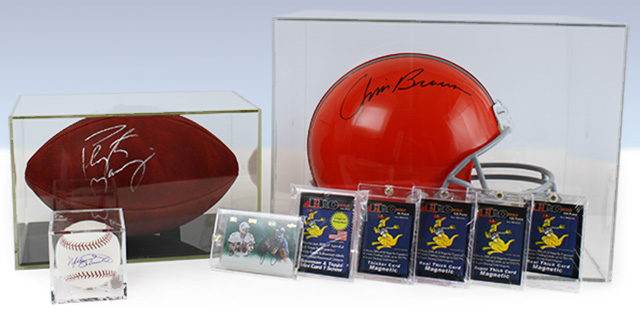 Virtually the entire spectrum of solar light can contribute to the fading of colors and the deterioration of collectibles. To keep sports cards and memorabilia in mint condition, it’s recommended to keep them in a place that limits exposure to direct and indirect sunlight. The ultraviolet range of solar radiation, or UV light, is of high concern to collectors. According to the US Library of Congress, “ultraviolet rays can break down the chemical bonds and thus fade the color(s) in an object – it is a bleaching effect.”
To protect valuable trading cards from UV light, BCW offers the popular Pro-Mold Card Holders. All Pro-Mold items offer UV protection, except the plastic boxes and the legacy card holders that include the snap-tite and four screw screwdown. The card holders with UV protection are rated to block 98.5% to 99% of UV rays for 5 years or more. Pro-Mold also makes Baseball Squares rated for 5 years or more of UV protection and another Square rated for an amazing 25 years. The card holders and the 5-Year Baseball Squares are made from polystyrene with a UV absorbing additive, while the 25-Year Baseball Squares are made of acrylic with a UV absorbing additive. To confirm the shielding qualities of this UV protection, the Atlas Weathering Testing Group of DSET Laboratories reviewed the Pro-Mold products. See the results.
To protect collectible baseballs, footballs, basketballs and helmets from UV rays, BCW offers a line of BallQube display cases made from polystyrene with UV stabilizers. According to a K & N Labs analysis, BallQube cases with UV stabilizers block 98% of UV light in the 200 to 380 nanometer range.