
Receiving Your BCW Freight Shipment
Large BCW wholesale orders normally ship on pallets via freight carriers, a service often called LTL (Less Than Truckload). These shipments travel with other freight and may be handled multiple times during transit.
BCW works hard to protect your order before it leaves our warehouse. We carefully stack products on pallets, offset cartons away from pallet edges, and securely wrap each shipment to reduce the risk of damage.
While issues during transit are not common, they can happen. The good news is BCW has you covered—we typically replace damaged items or issue credit when problems are properly reported.
The best way to make sure everything is handled quickly and correctly is to inspect your shipment before signing for delivery.
Quick Checklist for Receiving Your Delivery
1. Inspect the shipment before signing
Check the pallet and cartons as they are unloaded.
Look for:
- Damaged cartons
- Crushed corners or torn packaging
- Missing cartons or items
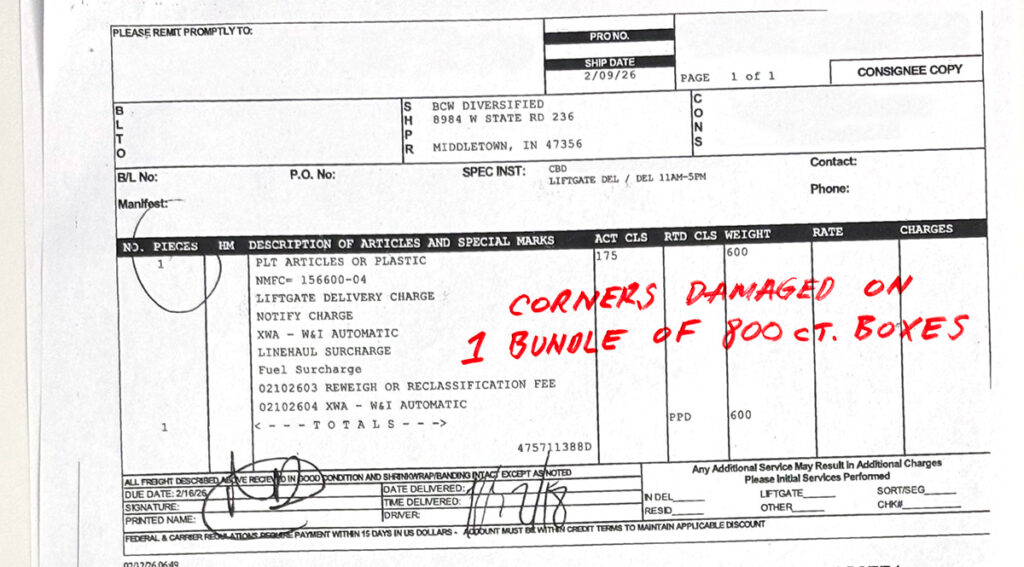
2. Write any problems on the Bill of Lading
If something is damaged or missing:
- Write the issue clearly on the BOL before signing
- Example: “2 cartons damaged” or “1 carton missing”
If you cannot fully inspect the shipment, write:
“Subject to count and inspection.”
Important (Digital Signatures):
Some carriers use a tablet or smartphone instead of a paper BOL.
- Do not sign if there is damage
- Ask how to record damage in their system
- Ensure it is documented before signing
3. If damage or shortages are found
Immediately:
- Take photos
- Keep all packaging
- Contact your BCW representative
- Email photos and the signed BOL to the BCW Customer Service Team.
4. Check for concealed damage
If damage is found after unpacking:
- Take photos
- Keep packaging
- Report it to BCW within 5 days of delivery
Important Policy Reminder
Following this process protects your business.
- If damage is noted at delivery, the freight carrier is responsible
- If it is not noted, BCW may be charged—and that cost may be passed to you
Bottom line:
Inspect and document before signing.
It ensures proper claims—and prevents unnecessary costs to your business.